
Cervical cancer
Key facts
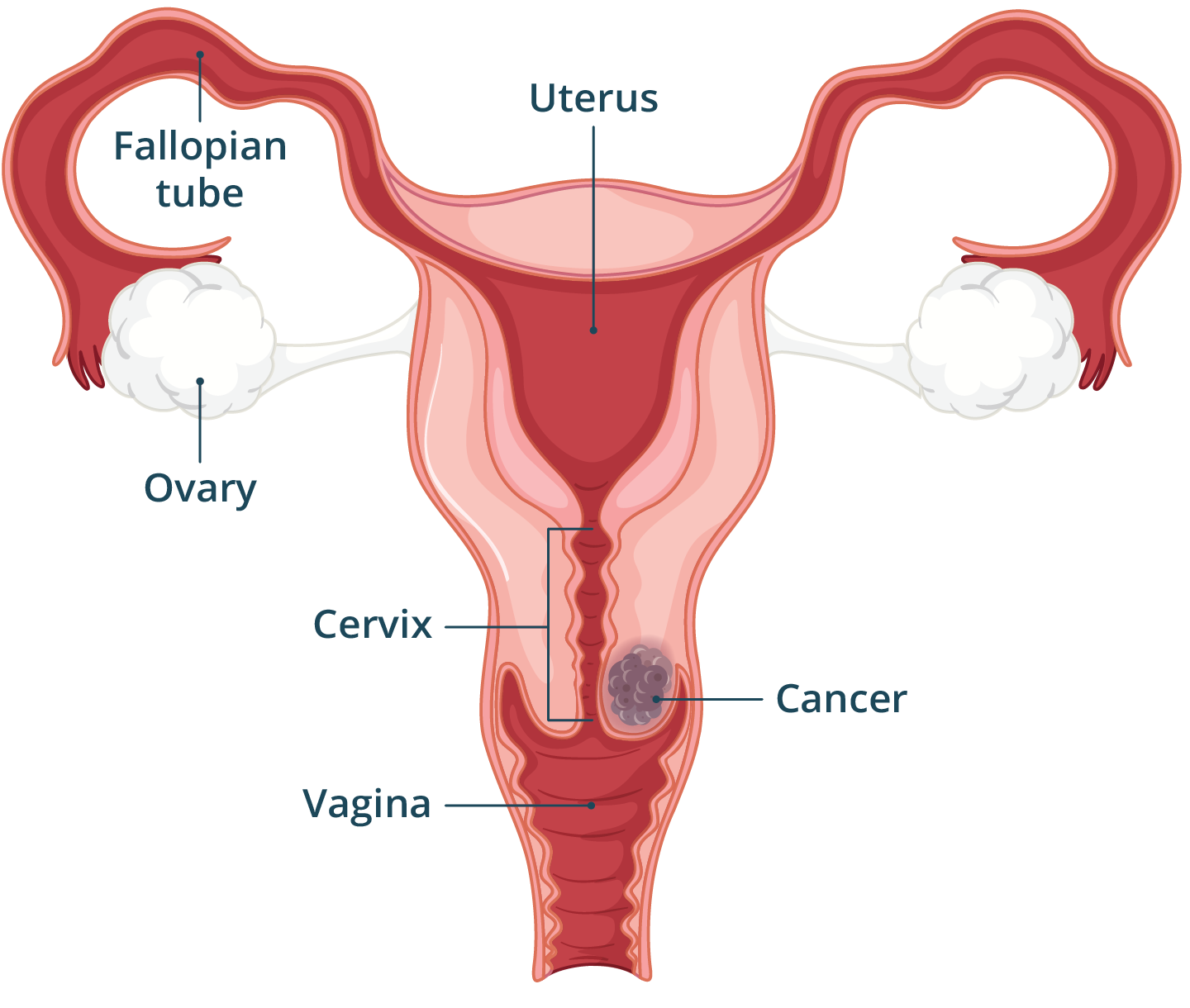
- Cervical cancer affects the cervix, which is the entrance to the uterus from the vagina.
- It is usually caused by certain types of human papilloma virus (HPV) that can lead to cancer over time.
- Most high-risk types of HPV can be prevented by the HPV vaccine.
- Regular cervical screening tests can find early changes that could lead to cancer.
- Early detection of cervical cancer can lead to a good prognosis.
What is cervical cancer?
Cervical cancer is cancer that starts in or on the cervix. The cervix is the lower part of the uterus (womb) that connects to the vagina. Cancer happens when cells grow and spread in an uncontrolled way.
It usually develops slowly over many years, starting with cell changes in the cervix that can become cancerous if not treated.
Cervical cancer is a common cancer affecting females. There are 2 main types:
- Squamous cell carcinoma starts in the flat cells on the surface of the cervix, and is the most common type.
- Adenocarcinoma starts in the cells that produce mucus in the cervix.
What are the symptoms of cervical cancer?
In its early stages, cervical cancer may cause few or no symptoms.
Symptoms of cervical cancer include:
- unexpected vaginal bleeding, such as between periods, after menopause or after sex
- unusual vaginal discharge (rare)
- pain during sex
Symptoms of more advanced cancer may include:
- pain in the lower belly (pelvis) or lower back
- unintended weight loss
- low iron (anaemia)
- weakness or wasting of the body (cachexia)
- heavy and frequent vaginal bleeding
- fatigue
- leg pain or swelling
CHECK YOUR SYMPTOMS — Use the Symptom Checker and find out if you need to seek medical help.
What causes cervical cancer?
Cervical cancer develops when cells in the cervix change and grow in an uncontrolled way. It is most often caused by a long-term infection with certain types of human papillomavirus (HPV).
HPV infection
Most cervical cancers develop after an infection with certain types of HPV. HPV is a common virus, with most people having HPV at some point in their lives. HPV spreads between people during sexual contact.
Most people with HPV have no symptoms and the virus is naturally destroyed by their immune system. In some people, the virus stays in the body and can cause changes in the cervix. These changes happen slowly — usually over years — and can lead to cancer.
Other risk factors
Other risk factors for cervical cancer are:
- smoking
- long-term use of the oral contraceptive pill
- a weakened immune system
- exposure to a chemical called diethylstilboestrol (DES — a medicine used in the 1950s to prevent miscarriage)
- early sexual activity (before 17 years of age) or multiple sexual partners
- having many children
When should I see my doctor?
You should see your doctor if you have:
- unexpected vaginal bleeding
- a change in your vaginal discharge
- pelvic pain
These symptoms can also be caused by other conditions. If you're worried, your doctor can give you advice or refer you for tests.
FIND A HEALTH SERVICE — The Service Finder can help you find doctors, pharmacies, hospitals and other health services.
How is cervical cancer diagnosed?
Cervical cancer can be diagnosed after a positive cervical screening test. Some people don't have any symptoms but still get a positive test.
If you have a positive cervical screening test, your doctor may refer you for more tests. You may also need tests if you have symptoms of cervical cancer.
Tests may include:
- colposcopy— a specialist doctor looks at your cervix with a magnifying tool to look for abnormal cells that could be cancerous
- biopsy— a sample of your cervix is taken and checked under a microscope for cancer cells
- blood tests— to check how well your kidneys and liver are working and your general health
- imaging scans — pelvic ultrasound or a computed tomography (CT) scan or magnetic resonance imaging (MRI) scan can help know the stage of the cancer and see if it has spread
ASK YOUR DOCTOR — Preparing for an appointment? Use the Question Builder for general tips on what to ask your GP or specialist.
How is cervical cancer treated?
Treatment depends on whether the changes in the cervix are precancerous or if cancer has already developed. 'Precancerous' means that the cells in the cervix have started to change but haven't turned into cancer yet.
Treating precancerous cell changes
If tests show precancerous cell changes, your doctor can treat them to stop them from becoming cervical cancer. There are several ways to treat precancerous cells:
- Wire loop excision (LLETZ or LEEP) — a thin, heated wire loop removes the abnormal cells from the cervix.
- Cone biopsy — a small cone-shaped section with the abnormal cells is removed using a scalpel (sharp knife).
- Laser surgery — a focused beam of light (laser) passed through the vagina destroys abnormal cervical cells.
Treating cervical cancer
If precancerous cells are not treated, they can develop into cervical cancer. When cervical cancer is found early, treatment can often stop it from progressing.
There are several procedures and surgeries that treat cervical cancer:
- Cone biopsy — removes a cone-shaped piece of tissue containing early-stage cancer with a scalpel.
- Trachelectomy — surgery for early stage cervical cancer that may be an option if you want to have children after treatment.
- Hysterectomy — removes the uterus, cervix and the top part of the vagina. It is the most common surgery for cervical cancer. After this surgery, you won't be able to become pregnant.
If you don't plan to have children after treatment, your doctor may recommend removing both fallopian tubes. This surgery is called a bilateral salpingectomy. It is the preferred treatment option alongside hysterectomy for people with early stage cervical cancer.
If cervical cancer has spread to other parts of the body (metastasis), you may need other cancer treatments. These treatments may include radiotherapy or chemotherapy.
Your doctor will consider several factors when recommending the best treatment for you, including:
- the size of the cancer and how far it has spread (its stage)
- whether you have gone through menopause
- whether you would like to be able to become pregnant in future
Living with cervical cancer
If you need to talk to someone about your mental health, call Beyond Blue on 1300 22 4636.
Treatment for cervical cancer can lead to changes in your bladder, bowel and sexual function. Vaginal dryness is also common after many of the procedures used to treat cervical cancer.
It is common to have a wide range of emotions, such as anxiety, sadness or fear of the cancer returning. Talk to a counsellor, social worker, or support group to help you manage these feelings. You can also ask your doctor for advice.
Maintaining a healthy lifestyle including a balanced diet, regular physical activity and enough sleep can support your recovery and overall health.
Remember, living with cervical cancer is not just about managing the disease. Take care of yourself, seek support and keep up your usual daily activities as much as possible.
What are the complications of cervical cancer?
Cervical cancer can cause different complications, especially if it spreads to other parts of the body. This spread is called metastasis. Treatment can also lead to side effects. These may affect your ability to have children or make it harder to become pregnant. Some people experience problems with sexual function or go through menopause.
Cancer treatments, such as chemotherapy and radiotherapy, can cause side effects including:
Your doctor will advise you about side effects you may experience with your treatment, and help you manage these.
Can cervical cancer be prevented?
There are ways to reduce your risk of cervical cancer through vaccination and regular cervical screening. These steps can help catch any problems early.
HPV vaccination
The HPV vaccine is recommended between 9 and 25 years of age. It is free through the National Immunisation Program. It helps prevent infections from high-risk types of HPV that can cause cancer.
Cervical screening tests
Having a cervical screening test every 5 years can help prevent advanced cancer and is recommended if you:
- are aged between 25 and 74 years
- have a cervix
- have ever had sexual contact
Cervical screening tests have replaced Pap smear tests. They check for high-risk types of HPV by taking a small sample of cells from the cervix. This helps find and treat early changes in the cervix that could lead to cancer.
Self-collection for cervical screening is now widely available. This allows you to use a swab to take your own sample. Self-collection isn't suitable for everyone — speak to your doctor about what's right for you.
Resources and support
Find out more about the HPV vaccine in Australia and the National Cervical Screening Program.
For information and support services:
- Cancer Council offers information about cervical cancer and cancer treatment.
- Cancer Australia provides information about cancer and cancer treatment.
- The Australian Cervical Cancer Foundation supports people with cervical cancer and their families.
- Peter MacCallum Cancer Centre provides cancer information and support services.
- Carers Australia offers information and support for carers.
Languages other than English
- The Department of Health, Disability and Ageing offers information about cervical screening in multiple languages.
- Visit Cancer Council's Multilingual resources page.
- Cancer Council's cancer guides are available in other languages.
- Canteen has a guide for young cancer patients translated into languages other than English.
Information for Aboriginal and/or Torres Strait Islander peoples
- The Cancer Institute NSW provides information about cervical screening for Aboriginal and/or Torres Strait Islander peoples.
- The Department of Health, Disability and Ageing offers information about cervical screening tests.
- Our Mob and Cancer has more information and resources about cervical cancer.
Learn more here about the development and quality assurance of healthdirect content.
Last reviewed: October 2025